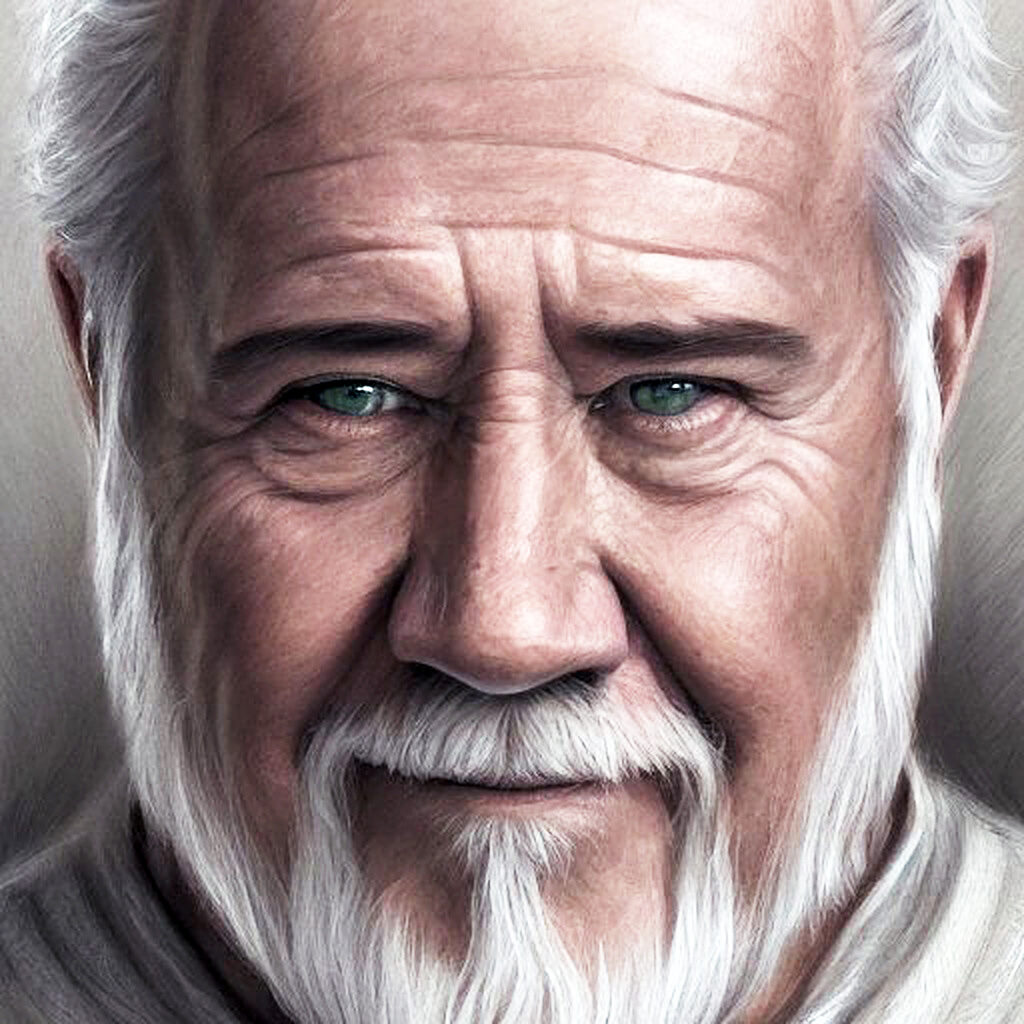
The legend of Sorry Dog
Treasure Island meets Gilligan’s Island with a bar tab.
by Carl as told to Fast Freddy
Author’s Note – One Call Away
If there’s one thing I learned from the journey, it’s this: you never really know what hangs on the other end of a ringing phone.
For me, it was Island Eddie telling me to catch a plane. One choice. One yes. And suddenly I was living a story I could never have planned, filled with storms, pirates, lobsters, laughter, danger, and friendships forged in saltwater.
I left for seven days. I stayed six months. I came home with no job, no girlfriend and no plans, yet somehow, I had everything I needed. A boat. A name. A calling.
That’s how Sorry Dog was born. Not from a business plan or a tidy five-year goal, but from the simple act of saying yes to adventure.
So if you’re staring out the window, feeling trapped by routine, remember this: all it takes is one call, one leap, one “yes” to change the course of your life.
I did it. And I’ve been Sorry Dog ever since.
Chapter One – The Call
Little did I know, on that cold, drizzly January morning of 1985 in Jacksonville, Florida, that when I answered my office phone, I had just quit my J.O.B. (I still can’t say the word, I have to spell it).
The voice on the line tugged at my heartstrings. It was Island Eddie. His words were simple, almost casual, but they cracked open the world I thought I knew:
“Go to the airport, get on a plane and fly to Georgetown in the Exumas. I’ll meet you at the dinghy dock at the Peace and Plenty Hotel at Happy Hour tonight.”
That was it. A single invitation, and the fuse was lit.
When I called my boss and my girlfriend from the airport, their responses were eerily similar: relief, mixed with the sort of indifference you’d expect if I’d told them I was stepping out for milk. “I’ll be back in a week!” I promised. Famous last words.
Before heading out, I swung by my newly purchased but still unnamed 50-footer. (Later christened Sorry Dog and the name has a story of its own, but we’ll get to that.) I tossed in a few t-shirts and seven pairs of swim shorts. Flip-flops on my feet. I figured that was plenty. I mean, I was only going to be gone for seven days, right? I even switched off the Christmas tree lights on my way out the door.
Island Eddie’s girlfriend, Joanie (a woman who’d been roaming these islands long enough to know better) gave me my first taste of island wisdom.
- Rule #1: Wear just enough jewelry that if things go sideways, you can sell it and buy a ticket home.
- Rule #2: Travel light. You can always trade a beer for what you need.
- Rule #3: Take enough beer to get back home.
Sounded simple enough but nothing about what was coming would be simple.
My first clue that I wasn’t going back to Jacksonville anytime soon came during Happy Hour at the Peace and Plenty Hotel. The sun was dropping behind the palms, the rum was flowing and Eddie leaned in with that crooked smile of his.
“If you get on the boat with us, we’re heading all the way to St. Croix, down in the Virgin Islands,” he said.
“How far is that?” I asked, naive as a schoolboy.
“About two thousand miles from Jacksonville. Should take two, maybe three weeks.”
A responsible man would’ve laughed, raised a glass and caught the first flight home. Instead, I nodded. I was in.
Eddie told me later that once I set foot aboard his 38-foot trawler, Hiatus (the name should’ve been my warning) I wasn’t going to be given a choice. If I hadn’t agreed, I’d have been kidnapped. He was dead serious.
So I did what any sensible man with a fresh taste for freedom would do: I traded the remainder of my round-trip airline ticket to the bartender for a round of drinks to toast our new adventure.
Thirty-six cases of beer, a stocked bar and a boat with a name that meant “time away from responsibility.” That was our preparation. We slipped away from the dock with the stars just starting to peek through the Caribbean sky.
Somewhere back in Jacksonville, my boss and my girlfriend were waiting for me to stroll back into their lives in seven days.
Seven days. Yeah, right.
What followed was five months of storms, sunburns, pirates, near-misses and laughter sharp enough to make your ribs ache.
Climb aboard Sorry Dog and follow me through the islands on a mad, reckless, Caribbean odyssey that began with a phone call and ended… well, you’ll just have to read on.
Chapter Two – The Crossing
Our next stop on what we were now calling the “Don’t Stop the Carnival” cruise (named after the great Herman Wouk novel that nailed the madness of island life) was supposed to be Samaná, on the Dominican Republic’s north coast.
According to our reliable Sat.Nav unit, it was a thirty-six-hour run across open ocean. In those days, GPS was still magic to us. For adventurous boaters, it was the single greatest invention since the rum punch. If you plugged in the numbers, you could find almost any speck of sand in the ocean. At least in theory.
We managed to find the Dominican Republic all right, it’s hard to miss when it’s lashed to Haiti and sprawls across the sea like a small continent. But we overshot Samaná by a good hundred miles and landed in Puerto Plata instead. A minor miss on the charts, a major slog in reality.
That thirty-six hours was ugly. The kind of ugly you don’t forget. The seas stacked up into gray walls, and the boat pitched and dropped like an elevator with its cables cut. To move below deck, you had to crawl on your hands and knees, clinging like a crab to keep from being hurled across the cabin. Using the head? Let’s just say it was a sport of its own, part rodeo, part Russian roulette.
The storm had blown us well off course, spitting us back west of Hispaniola, and every mile was paid for in bruises. Salt spray stung our eyes, and every wave sounded like a cannonball slamming into the hull.
But the sea wasn’t finished teaching us how small we were.
Our first warning came over the VHF. At first it was just static, then a voice. A desperate call for help, cracking in the wind. Then, silence, broken only by the sound of someone praying into the void.
We were too far away to render aid but we did what we could: relayed their position to another boat, a father and son crew heading back from St. Croix. For a moment, it felt like maybe fate had lined things up. Help was near.
But sometime around three in the morning, the radios went dead. Both boats gone. Their voices swallowed whole by the storm.
We sat in silence, the only sound the howl of the wind and the groan of Hiatus as she climbed another black mountain of water. The sea has no pity and in that moment we knew: this crossing wasn’t just a cruise. It was a gamble.
And we were only at the beginning.
Hour by hour, we clawed east, the trawler shuddering with each wave. Eddie never left the helm, knuckles white on the wheel. Joanie whispered prayers under her breath. Shelton pretended calm but chain-smoked in the corner. I was in the bilge with a bucket more than I care to admit.
Then, sometime after dawn, the wind eased. The sky cracked open to a pale wash of blue. The seas were still ugly but they no longer had teeth. We were battered, bruised and half-delirious but we were alive.
By mid-morning, land rose out of the haze, green hills and the scatter of white houses along the Dominican coast. We hadn’t made Samaná. We’d been blown a hundred miles west. But it didn’t matter. After thirty-six hours of hell, we would’ve kissed the first patch of dirt we could stagger onto.
Puerto Plata. We had arrived.
Chapter Three – Fuel, Fortune, and Fool’s Luck
Anyone who’s traveled the Caribbean long enough hears the same story: cheap fuel in Venezuela and all through the so-called Banana Republics. Word spreads on the docks like gospel, though the truth is always tangled.
We were tied up in Puerto Plata Harbor, Dominican Republic and fortune seemed to be smiling on us. Joanie, Island Eddie’s girlfriend and resident casino shark, had walked out of the local gambling house with $5,900 in folding money. Just like that, our worries about diesel vanished.
Shelton, a millionaire friend of Eddie’s who’d joined us, didn’t have to think twice about money. He had the look of a man who knew he’d be gone six to eight months and could afford it. I, on the other hand, had been “gone for seven days” since January and was now months into a voyage that didn’t seem to have a finish line.
Still, we had cash in hand and visions of full tanks.
We asked around about the price of diesel and a local grinned and told us: ninety-five cents. My jaw dropped. We’d been paying a dollar sixty-five a gallon back in the Bahamas. This was practically stealing the stuff.
We gave our new Spanish-speaking friend a wad of bills and told him to bring us as much fuel as he could find. Visions of filled tanks and endless miles of open sea danced in our heads.
The next afternoon, he arrived. Not with a truck. Not with gleaming tanks. But with an ox-drawn cart.
On the cart sat two battered, rust-flecked oil drums that looked like they’d been salvaged from the bottom of the harbor. A cracked water hose dangled over the side, our “fuel line.” Diesel sloshed inside, leaking down the sides in greasy rivulets.
Island Eddie eyed the drums. “Where’s the rest of it?”
The man just shrugged. This was it.
I spoke the most Spanish among us, though calling it “Spanish” was generous. Between my broken words, wild hand gestures, and his laughter at my accent, the truth finally came out. He reached into his pocket, pulled out an empty Coke bottle, and held it aloft like a trophy.
“Un litro,” he said, tapping it with his finger. This much diesel for ninety-five cents.
Liters, not gallons. Our dreams of bargain fuel had evaporated into a puddle of spilled diesel at our feet.
We cursed, laughed and cursed again. But what could we do? We siphoned what we could from those rusty drums into Hiatus, hoping the filter gods would forgive us. The ox snorted, the cart wheels creaked and the smell of raw diesel soaked the air and our clothes.
It wasn’t much, but it would have to do. Tomorrow, we were setting out again, bound for Samaná.
And in the Caribbean, tomorrow always means another adventure.
Chapter Four – Mud for Fuel
We left at first light, the Dominican sun burning off the haze as Hiatus and Shelton’s sleek boat slipped down the rocky coast. Spirits were high. We had “fuel” in the tanks, a plan to reach Samaná and just enough swagger to believe the sea might go easy on us for once.
But within an hour, the dream cracked.
The engines coughed, wheezed, and died. Both.
The fuel separators looked like someone had poured mud straight through the filters. I scrambled into the engine room, the air thick with heat and the sickly-sweet stench of bad diesel. Sweat dripped into my eyes, mixing with the wannabe fuel sloshing in the bucket at my knees. Every time the boat lurched, the brown sludge leapt like it wanted to coat me.
I tried to clear both engines but gave up, the stuff wasn’t just dirty, it had the same texture as wet clay. My hands were black with it, my stomach twisting.
Then came Joanie’s scream.
Through the bulkhead I could hear it now, the hollow thunder of surf against rocks. We weren’t just drifting. We were drifting toward cliffs.
My stomach revolted and the bucket of slop fuel became a cocktail of diesel and vomit—mine. Sometimes it really does suck to be us.
I hollered for Eddie and he tried the port engine. Cough. Sputter. Hit-and-miss. Then, finally, a weak idle. Not much but better than nothing. We shoved it into gear, the boat shivering forward just enough to nose back toward deep water.
Shelton wasn’t laughing anymore. Even his millionaire yacht had drunk the same poison fuel. Both of us were limping along on one-cylinder wheezes, like wounded dogs.
We needed shelter.
The chart showed Sosúa Harbor, five miles east. The Waterways Guide carried a warning in bold:
“LOCAL USE ONLY. NOT TO BE USED BY FOREIGNERS FOR ANY REASON. EXPERIENCED BOATERS ONLY.”
And the kicker:
“A good idea upon entering is to catch a wave and surf through the narrow rocky entrance.”
With engines misfiring at idle speed, “surfing” into a harbor designed for fishermen in wooden skiffs wasn’t just reckless, it was suicidal.
But out on the open coast, the cliffs loomed and the seas shoved us ever closer. We were out of options.
Sosúa, deathtrap or salvation, was our only shot.
Chapter Five – Surf, Soldiers, and a Pig on the Bus
Joanie christened our entrance into Sosúa Harbor as a “Mess-In-Your-Pants Adventure.” She wasn’t wrong. Surfing two half-dead, mud-fueled boats into a harbor that locals warned foreigners against was lunacy but somehow we pulled it off.
We were barely anchored when the real show began.
From across the harbor came a Dominican gunboat, bow up, diesel engines roaring, soldiers clinging to the rails like angry hornets. They had machine guns slung across their chests and their hands full of gestures that translated to the universal language of: “What the hell are you doing here, Americanos?”
I did the only thing I could, I stepped out with my hands in the air and my best “don’t shoot the tourist” grin.
They weren’t amused.
With my broken Spanish I explained the mud fuel, the dead engines, the drift toward the cliffs. The El Capitán scowled, barked orders and made it very clear: we were forbidden to set foot on shore. We could stay the night but at first light we were to leave, or they’d board us.
The thought of them boarding Shelton’s boat, with its not-so-little arsenal of twenty-seven firearms, made my stomach knot. Hell, Shelton had more guns than the soldiers did. That would not have ended well.
So we worked through the night in the engine rooms, straining filters, sweating diesel, cursing the mud masquerading as fuel. This harbor was no paradise.
At dawn, we pulled anchor. The gunboat returned, this time with a translator who was more polite but no less firm. “Take down your pirate flag,” he said, pointing to the skull-and-bones flying from our rigging. “A very bad thing to have in these waters.”
Point taken.
We bumped bottom three or four times clawing our way back out of Sosúa but at least we were free. Limping east along the Dominican coast, the cliffs rose sharp and jagged. In their shadows yawned enormous caves where the Taíno Indians once lived. The guidebooks tell the sanitized version. Michener’s Caribbean tells the bloody one, fifteen, maybe twenty thousand slaughtered in a single day when the Spanish came for gold and salt. The echoes of that history seemed to ride on the wind, haunting those caves.
Then, as if the island wanted to balance the horror with beauty, the whales appeared.
Every spring the humpbacks return to Samaná Bay to give birth and we had arrived in their season. Spouts of white mist shot into the sky, tails slapped the water, calves breached in play. The bay itself stretched forty miles long, a cradle of turquoise and cobalt framed by green hills and small islands. It was breathtaking.
And at the far end, perched on a bluff, the town of Samaná waited for us like a promise.
We ended up staying six weeks. Long enough to learn its rhythms, to explore and to take a 300-mile bus ride across the country to Santo Domingo.
That bus ride… deserves its own warning label. The driver barreled down mountain roads on the wrong side, leaning on the horn as if it were a shield. People crossed themselves as we passed. I sat wedged next to a man who carried a live pig tied in a croaker sack, the poor animal’s snout pressed against my leg like it was seeking comfort. Chickens dangled upside down from the ceiling, flapping and squawking with every lurch.
Adventure, danger, absurdity, sometimes in the Caribbean, you don’t need a storm at sea to feel like your life’s on the line.
Chapter Six – Six Weeks in Samaná
We didn’t mean to stay. Nobody ever does. But Samaná had a way of getting under your skin. What started as a safe harbor turned into six weeks of whale songs, cold beer, questionable decisions, and friendships that felt as old as the sea.
The bay was a living postcard, forty miles of protected water glowing turquoise in the sun, with humpbacks breaching in the distance. Every morning the air echoed with the thunder of their tails on the water, as if they were reminding us that no matter how far we’d come, we were the visitors here.
On shore, life slowed to island time. Reggie, one of the locals who seemed to know everyone and everything, became our unofficial guide. He could get us fuel when the pumps were dry, fresh fish when the boats came in late and rum even when the bars claimed they were closed. In the Caribbean, there’s always a back door if you know the right smile.
But it wasn’t all paradise. We still carried the stink of that bad Dominican diesel and every few days the engines reminded us with another sputter or stall. Shelton cursed the fuel, cursed the filters and then poured himself another drink. He had the money to fix problems; we had to patch them with grit and Joanie’s casino winnings. The balance between us was shifting, though none of us said it out loud.
Nights stretched long under the stars, filled with laughter, lies and more than one argument about where we’d go next. Eddie dreamed of pressing farther south of St. Croix and beyond. Shelton wanted the guns locked, the engines rebuilt and some version of control that never seemed to fit in these waters. Me? I was caught between the thrill of freedom and the tug of the life I’d left in Jacksonville, my “seven-day trip” was now measured in months.
But Samaná had a way of making you forget.
Then came that bus ride.
By the time we stumbled into the capital, we were half deaf, half mad, and wholly convinced that the sea, despite its dangers, was safer than Dominican highways.
When we finally returned to Samaná, it felt like home. Six weeks had slipped through our fingers. But the horizon was calling, and Eddie was restless.
It was time to move on.
Chapter Seven – Donald Duck’s Pump
We said our goodbyes to Reggie and the other locals with promises to return (the kind you make knowing you probably never will). We locked all the guns away from our young Texas friend, Joe Bob, whose definition of “fun” was a little too loose for comfort and pointed the bows toward Mayaguana.
Leaving a harbor is never as graceful as you imagine. Sure enough, we promptly ran aground. Trawlers are forgiving, though, and we plowed our way through the sandbar, heeling over just enough to remind us who was really in charge. Somewhere in the chaos, one of the pumps sucked up grit and seawater. Another problem for the list.
From there we set course for “Provo” (Providenciales) in the Turks and Caicos Islands.
I’ll never forget the first glimpse of that island. After months of green hills and palm-fringed bays, Provo looked like something out of another world. Nothing but rock and dust. I hadn’t seen that much bare stone since I left the coal mines back in Tennessee.
Two anchorages presented themselves. One was popular but to get in you had to surf your boat through a razor-thin cut in the reef. The skeletons of abandoned boats lay scattered on both sides, silent warnings. We weren’t about to add Hiatus or Shelton’s yacht to that collection. Option #2 was an open harbor, plain but safe. We dropped anchor and decided we could reach town by dinghy when needed.
The pump was priority one. We got on the UHF radio and after a crackle of static, a voice came back.
“Donald Duck,” he called himself.
Donald claimed to be a mechanic and told us to bring the pump. Skeptical but desperate, we rented a car and bounced across the island until we found his “shop”, a pile of rocks high up on a hill, more junkyard than garage.
Donald Duck and his wife, Minnie, welcomed us with grins that showed more gaps than teeth. He tinkered for an hour, took a beer as payment and handed back a rebuilt pump for the grand sum of fifteen dollars.
Sometimes the sea demands everything from you. Sometimes it gives you Donald Duck.
Chapter Eight – The Land Pirate of South Caicos
We learned something on Provo and it wasn’t about engines or navigation. It was about flags.
If you wanted a warm welcome, you looked for a bar or restaurant flying the Stars and Stripes. If it was flying a French Canadian flag, you could count on a frosty reception. The French thought Americans laughed too loud, drank too much and were far too forward for their liking.
I tested the theory once, striking up a conversation with a French couple. Within minutes I was politely but firmly chastised. “We have not been properly introduced,” the man sniffed, as if I’d broken some centuries-old code. That was enough for us. We finished our beers, muttered to hell with it and pointed our bows toward South Caicos.
South Caicos was no tropical paradise. It was eight square miles of coral rock with barely enough dirt to plant a palm tree. But the journey there was something else.
Crossing the banks, the sea turned into a living jewel. The clarity was staggering, water so clean it seemed impossible. From the deck, you could watch the coral heads pass beneath you like cities in miniature, their colors blazing between aquamarine and crystalline azure. Sea fans waved lazily, schools of fish flickered like quicksilver.
It was unnerving, though. With the visibility so sharp, it looked like we were about to scrape bottom on every reef, when in truth we had eleven or twelve feet under the keel. Even so, we kept a sharp eye.
At one point we cut the engines, jumped in, and let the boats drift with the current. We floated weightless, the reef sliding silently below us, while Eddie fiddled with the Satellite Navigation unit. Thank God for GPS, I thought. Without it, we’d have been hopelessly lost.
But we played too long. The sun slid west, faster than we realized and by the time South Caicos rose ahead of us, darkness was close at hand.
That’s when we learned a hard lesson about Caribbean harbors: not every entrance is lit. In fact, some aren’t marked at all.
The channel markers to South Caicos? They weren’t missing. They were lying in a heap on the town dock, and had been for years. Nobody had bothered to put them back.
So there we were, no sun, no light, and unfamiliar waters. The reefs guarding the harbor mouth were invisible. We found them anyway, the hard way.
Hiatus shuddered as she scraped across them, the sound of metal twisting beneath us. Both props bent. We limped in, hearts in our throats, knowing we’d just paid our toll to Neptune.
And that’s when we met Tommy the Land Pirate.
Tommy owned the Admiral Arms Inn, which we quickly renamed The Admiral’s Armpit Inn. The place sat on a hill above the harbor, commanding a perfect view of the reef where fools like us stumbled in the dark. Tommy had a VHF radio in one hand, binoculars in the other and the patience of a spider in its web.
We weren’t his first catch, not by a long shot.
A boat entered just before us and went hard aground. Within minutes Tommy was on the radio, offering “help.” He dispatched a local skiff to pull them free, then smiled as the police impounded the poor souls’ boat the moment they reached the dock. By the time the dazed boaters climbed the hill to thank their rescuer, Tommy already had a $20,000 salvage bill written up.
They settled for $1,500, cash on the barrelhead. That night the local police drank for free in the Admiral’s Armpit.
We watched from the bar, our wallets clenched tight and I knew one thing for certain—beautiful as the Caribbean was, danger didn’t always come with waves and storms. Sometimes it wore a smile and served rum behind a crooked counter.
Chapter Nine – The Land Pirate’s Grip
When we realized our bent props weren’t going to fix themselves, we asked around in town about a mechanic, maybe even another “Donald Duck” like we’d found on Provo. No such luck. South Caicos had no Donald, no Mickey, not even a Goofy. Our only option was to fly the props out for repair.
The problem was, there was only one flight in and out each week. A single rickety plane, Thursdays only. After asking a dozen locals who shrugged and waved us off, a weary shopkeeper finally gave us the truth: today was Saturday.
That meant we’d have to wait five days just to get the props off the island, then another week for them to come back from Miami. In the Caribbean, time stretches like taffy and five days can feel like fifty when you’re stuck in a pirate’s harbor.
And make no mistake, we were at Tommy the Land Pirate’s mercy.
Tommy was a wiry Greek with a face that looked like it had been carved out of coral and left too long in the sun. His eyes were quick and sly and everything about his manner said he was a man used to getting his way.
His inn, the Admiral’s Armpit, was the only place in town with a working telephone. That meant every call to Miami, every arrangement with the airline, every message home, went through Tommy and Tommy didn’t miss a chance to profit.
Beer? Five bucks. Cold shower? Five bucks. A phone call? Five bucks. Didn’t matter if the call went through or not.
That first night, I gave him five dollars and he dialed Miami. Busy signal. He shrugged, hung up and pocketed my money. A few beers later I asked him to try again.
“Gimme five more,” he said flatly.
I argued. He held out his hand. I paid.
We were trapped and he knew it.
The only light in Tommy’s lair was his wife. She was a small, quiet woman with eyes that carried something softer than her husband’s shark grin. One evening we offered to buy her a drink. She declined beer and rum, shaking her head.
“All I want is wine,” she said wistfully.
Wine. On South Caicos? Unbelievably, there wasn’t a single bottle on the island.
That’s when a wicked little plan began to take shape.
Shelton, our gun-toting Texas millionaire, had boarded his boat in Galveston with sixty cases of wine. He’d bought out the cellar of a bankrupt high-end restaurant, lock, stock and barrel. Some of the vintages were spectacular. Others were so bad we could only call them “yuck wine.” But it was wine nonetheless.
I leaned close to Eddie. “We need to visit Shelton,” I whispered.
We let it slip to Tommy’s wife that we had wine, then the next night we played our hand. Over dinner, we sighed heavily and told Tommy and his wife the “bad news.”
“As much as we tried,” I said, “Shelton won’t part with a single bottle. Not even for us.”
The temperature in the room dropped. Tommy scowled. His wife’s face hardened.
Reluctantly, after much hemming and hawing, we admitted we did have a few cases of wine ourselves. Not for sale, of course. It was all we had and we couldn’t spare it.
Tommy wheedled. He pressed. He raised his price in favors. Hours passed. Finally, we “gave in.”
We hauled up some of Shelton’s yuck wine and placed it on the bar. Tommy uncorked the first bottle, poured a glass, and handed it to his wife.
She took a sip, closed her eyes, and smiled.
That was it. The deal was sealed.
From that moment on, we had free run of the Admiral’s Armpit. Free phone calls. Free showers. Free food. Free beer. We were treated better than the local police, who, we noticed, still had to pay for their drinks.
Shelton got rid of his bad vintages. Tommy’s wife got her wine. Tommy got his peace and for once, all was right in our little corner of the Caribbean.
But like every sweet deal in the islands, it never lasts long.
Chapter Ten – Lobsters, Sharks, and Square Groupers
The days droned on while we waited for the repaired props. Endless stretches of blue sky, puffy white clouds and not much else. To pass the time, Island Eddie amused himself by needling Tommy the Land Pirate over the radio every morning with his coffee.
“Admiral Armpit Inn, come in, Admiral Armpit…”
We’d roar with laughter at the fiery barrage of curses Tommy spat back, indignant and sputtering as Eddie mispronounced the name of his inn again and again. The radio became our stage; Tommy our reluctant straight man.
During the days, we mingled with the locals. South Caicos was, at its heart, a fishing village with one of the largest lobster processing plants I’d ever seen. You could wander the docks and see literal mountains of lobster tails, some twenty feet high and thirty across. Workers with scoop shovels carved through them like snowdrifts, tossing them into waiting hands for rapid-fire packaging on ice.
The best part? The fishermen only got paid once a month. Which meant, if you caught them before they got to the plant, a six-pack of beer could be swapped for an entire case of lobster. Joanie perfected the art of intercepting these boats, returning to Hiatus with baskets of tails like a pirate queen whose only weapon was cold Budweiser.
It was on those docks I met T-boy, a local diver. He harvested lobster the hard way, free diving to depths of 50 and 65 feet, over and over, all day long. His laugh came easy, his patois rolled like music and before long he had me in the water alongside him, exploring the reefs while the props ticked down their days in Miami.
The Turks and Caicos reef system is staggering: sixty-five miles across, two hundred long, with the Turks Island Passage, a seven-thousand-foot-deep cut, serving as a migration highway for everything from humpbacks to manta rays. Nearly every dive brought something new. Grouper the size of barrels. Stingrays drifting like shadows. Hammerheads passing with the lazy menace of kings.
T-boy himself bore the scars of that life. His left leg was a twisted lattice of scar tissue. When curiosity got the better of me, he grinned at my unspoken question and told the story.
One dive, sack full of lobster, a twelve-foot shark had decided it wanted his catch.
“Did you give it to him?” I asked, thinking that sounded like the sanest thing in the world.
“Hell no, mon,” T-boy laughed. “I kick him in ‘de nose so he don take my dinner.”
I hesitated. “And then?”
His laughter boomed across the swells. “Den he get pissed and try to eat me! Next time, I tink I give him ‘de fish instead.”
I was left shaking my head. Next time? That was the islands for you, fatalism mixed with bravado.
On shore, time passed slowly. In the water, it raced.
One afternoon, while waiting for the plane, T-boy told me about a night fishing trip gone strange. A low-flying aircraft thundered overhead, dropping heavy bales into the sea. Curious, he motored toward the splashes and found dozens of plastic-wrapped “square groupers” floating in the current. With a fisherman’s pragmatism, he grabbed one bale, dragged it ashore and disappeared for a month.
When he came back, not a single fish in his boat but not hurting for money, either.
The Caribbean was like that. Paradise above the waves, shadows lurking just beneath.
Chapter Eleven – Wheels, Wine, and Revenge
Thursday finally arrived. We gathered at the airport, the only modern building on the island, courtesy of the drug runners who’d once used it as their staging point. A dusty strip, goats grazing at the edges, donkeys braying in the weeds.
The plane circled low, buzzing the field to scatter the animals before coming in. Its approach was smooth, poetry in motion, until the impossible happened.
A puff of dust. The wheels touched down. And then...one wheel came off.
The rogue tire bounced past the taxiing plane, gathering speed. It loomed like an eight-foot menace, zigzagging across the uneven ground straight toward us. Spectators screamed, goats scattered, donkeys kicked and brayed as the wheel barreled through, unstoppable. It missed us by a few feet, plowed through a fence and finally launched itself into the sea with a final splash.
Somebody muttered, “This gives a whole new meaning to another shitty day in Paradise.” Silently, I couldn’t help but agree.
But miracle of miracles, the props were on the plane.
We hauled them down to the dock and went to work with T-boy’s help. Installing them underwater was sweaty, bloody business. Salt stung our eyes as we wrestled the heavy blades onto their shafts, a six-foot barracuda circling like a foreman inspecting our every move. Finally, bolts snugged down, we surfaced, gasping.
Thirteen days we’d been unwilling landlubbers. Now, at last, Hiatus and Shelton’s yacht were seaworthy again.
We said our goodbyes to Tommy and his wife. Tommy groused about being forced to shell out cold cash for the last of Shelton’s “yuck wine.” He’d have preferred to trade, but we already knew how one-sided his trades were.
We cast off, throttles pushing water once more, the island shrinking in our wake. But we weren’t done with Tommy yet.
Throughout the next months, whenever fellow boaters asked about South Caicos, we’d warn them about the reef, tell them about the Armpit, and then, just to sweeten the tale, give them one final instruction:
“As soon as you drop the hook, get on the radio, call the Admiral’s Armpit Inn, and tell Tommy that Carl, Shelton, and Island Eddie said if you mention our names, he owes you a free pitcher of margaritas.”
We never knew how many tried it. But the thought of Tommy’s face when that call came in kept us grinning for many miles.
Revenge is sweet, sayeth somebody. In the Caribbean, it’s sweeter still.
Chapter Twelve – One Sorry Dog
When we finally pointed the bow back toward Jacksonville, the sea felt different. The horizon was still wide and blue, the sunsets still burned with fire, but something inside me had shifted. I wasn’t the same man who had answered the phone that cold January morning.
By the time we tied up in Florida, I was bone-tired, salt-crusted and sun-burnt down to the soul. For a few days, I did nothing but lay in a hammock strung between two palms at the marina. Rocking with the breeze, I let the memories wash over me, storms and sharks, gunboats and land pirates, lobsters and laughter.
It was during those hammock days that the name was born.
The bartender at the little dockside bar would nod toward me when the rum flowed and the regulars gathered. “See that fella over there in the hammock?” he’d say with a grin. “That’s one Sorry Dog.”
The name stuck. First to me, then to my boat. And eventually, to the business I didn’t yet know I was starting.
I did go back to work, for about five minutes. The truth is, I was already fired. My boss just made it official, probably before I’d even unpacked my bag. My girlfriend had her own farewell speech ready, full of choice words and not a single tear. That chapter was closed and not gracefully.
But sometimes endings are the only way to find beginnings.
With nothing left to lose, I turned toward the water. I had a boat, a head full of hard-earned lessons, and a stubborn streak that no storm could wash away. From those simple pieces, Sorry Dog Marine was born.
It started small, helping other dreamers keep their boats afloat, passing on what I’d learned the wet, painful way. But it grew, one repair, one adventure, one misadventure at a time.
Looking back now, I realize what those six months taught me: taking a break from the routine, even when it feels reckless, can open the door to an entirely new life.
I set out for a week. I came back with a story. And a name.
Sorry Dog.